How Can Weight Loss and Weight Gain Affect Arm Lift Surgery Results?
How Can Weight Loss and Weight Gain Affect Arm Lift Surgery Results? Introduction You’ve finally decided to address that loose, sagging skin on your upper arms, the kind that makes you avoid sleeveless tops no matter how toned you feel underneath. Before booking a consultation, one question deserves real attention: how can weight loss and weight gain affect arm lift surgery results? The honest answer is that your weight, both before and after surgery, plays a bigger role than most patients expect. What Exactly Does an Arm Lift Address? An arm lift, known medically as brachioplasty, removes excess skin and tightens the underlying tissue of the upper arm. It’s commonly sought after for significant weight loss, pregnancy-related changes, or simply the natural loss of skin elasticity that comes with age. The goal is a smoother, more contoured arm, but that result depends heavily on what happens to your weight afterward, and even beforehand. How Can Weight Loss and Weight Gain Affect Arm Lift Surgery Results Long-Term? Skin has a certain amount of elasticity, and that elasticity gets used up with repeated stretching and shrinking. This is exactly why weight stability matters so much around the time of surgery. If You Lose Weight After Surgery Modest weight loss after healing is usually fine and can even improve arm definition Significant weight loss, especially more than a few pounds, can leave the skin without enough underlying fat for support This can cause new sagging in the treated area, sometimes requiring a revision procedure Rapid weight loss from major diet changes, bariatric surgery, or weight-loss medications should ideally happen before your arm lift, not after If You Gain Weight After Surgery New fat can accumulate in the upper arm, altering the smooth contour your surgery created Skin that was tightened during surgery can stretch again under new weight Scars may widen or become more noticeable if the surrounding skin is under added tension Significant weight gain sometimes requires a secondary procedure to restore results Why Weight Stability Before Surgery Matters So Much Surgeons plan incisions and tissue removal based on your body at the time of surgery. If your weight is still actively changing, whether up or down, the results may not hold their shape as your body settles. That’s why most plastic surgeon recommend reaching a stable weight, ideally maintained for about six months, before moving forward with brachioplasty. It isn’t about perfection. It’s about giving your results the best possible foundation. Practical Advice for Protecting Your Results Reach your target weight and maintain it for several months before surgery, if you’re actively losing weight Talk openly with your surgeon about any planned bariatric procedures or weight-loss medications Once healed, aim for consistent, moderate exercise rather than extreme diet swings Incorporate strength training, which supports muscle tone underneath the skin Stay well hydrated and maintain good nutrition, since skin health depends on more than just weight What Recovery Generally Looks Like Swelling and bruising are common in the first one to two weeks Compression garments help support healing tissue and reduce swelling Most patients avoid heavy lifting or strenuous arm movement for four to six weeks Scars typically fade significantly over six to twelve months Following your surgeon’s aftercare instructions closely supports both healing and long-term shape A Realistic, Reassuring Outlook So, how can weight loss and weight gain affect arm lift surgery results? Quite a lot, but that’s not a reason to feel discouraged. It’s simply a reason to plan thoughtfully. Patients who reach a stable weight before surgery and maintain it afterward tend to enjoy results that last for years. Your body will always continue to change with time, and that’s normal, but steady habits give your results the best chance to stay close to what you and your surgeon worked to achieve. If you’re considering an arm lift and want honest guidance on timing, weight stability, or what to expect for your specific body, Dr. Shraddha Deshpande, a plastic surgeon in Mumbai, is happy to talk through your goals and help you plan the right path forward.
Is Liposuction Safe for Weight Loss?
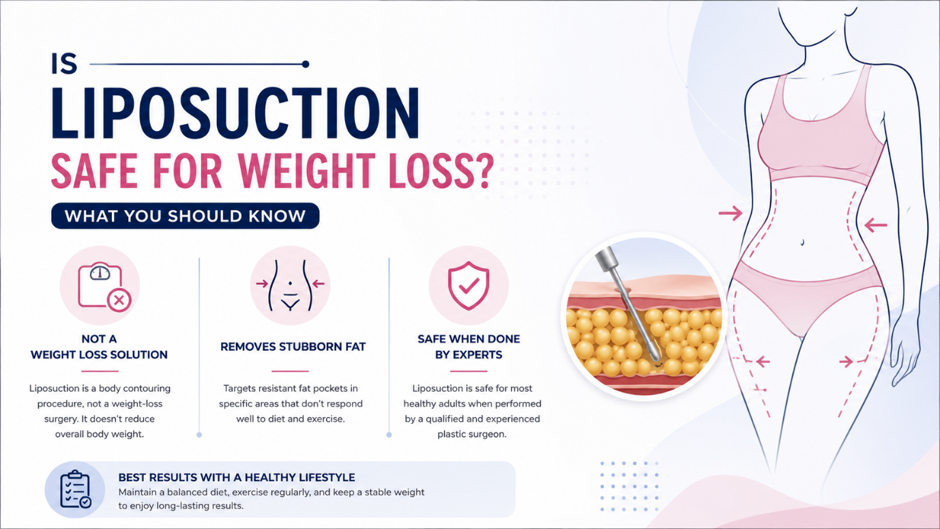
Is Liposuction Safe for Weight Loss? Introduction Many people dream of getting rid of stubborn fat that doesn’t seem to go away, no matter how much they diet or exercise. This is why liposuction is one of the most talked-about cosmetic procedures. But one question comes up again and again: Is liposuction safe for weight loss? The simple answer is no. Liposuction is not a weight-loss treatment. Instead, it is a body contouring procedure that removes stubborn fat from specific areas of the body to improve shape and proportions. Let’s take a closer look at how liposuction works, who it is meant for, and whether it’s a safe option. Liposuction Isn’t a Weight Loss Surgery Here’s the thing people often get wrong. Liposuction is designed to remove stubborn pockets of fat from specific areas, like the belly, thighs, hips, or arms. It’s not meant to help you drop a significant number of pounds on the scale. Think of it this way: diet and exercise change your overall weight. Liposuction changes your shape by targeting fat that doesn’t respond well to diet and exercise, the kind that seems to stick around no matter what you do. A good plastic surgeon will usually tell you this upfront. If someone is looking to lose a large amount of weight, liposuction typically isn’t the right tool for that job. Who Actually Benefits From Liposuction Liposuction tends to work best for people who are already close to their goal weight but have specific areas of fat that just won’t budge. This is often due to genetics rather than lifestyle habits. Good candidates are usually: At a stable, healthy weight Dealing with localized fat pockets rather than overall excess weight In good general health with realistic expectations Non-smokers, since smoking can affect healing If this sounds like you, a consultation with a qualified plastic surgeon is the best way to find out if you’re a good fit. Is Liposuction Safe? For most healthy adults, liposuction is considered safe when it is performed by an experienced and qualified Plastic Surgeon in a properly equipped medical facility. Like any surgery, there are risks, but serious complications are uncommon when the procedure is done correctly and proper aftercare is followed. Possible risks include: Swelling and bruising Temporary numbness Infection Bleeding Uneven body contours Fluid buildup under the skin Your surgeon will explain these risks before the procedure and guide you on how to reduce them. Liposuction vs. Weight Loss It’s important to understand the difference between these two goals. Weight loss aims to reduce overall body weight by lowering body fat through healthy eating, physical activity, and, in some cases, medical treatment. Liposuction focuses on removing stubborn fat from specific areas to improve body contour. It does not treat obesity or replace healthy weight-loss methods. Knowing this difference helps people make informed decisions and avoid unrealistic expectations. Will the Fat Come Back? The fat cells removed during liposuction do not grow back. However, this does not mean you can ignore healthy habits. If you gain weight after the procedure, the remaining fat cells can become larger, and fat may collect in different parts of the body. This can affect your overall body shape. Maintaining your results depends on: Eating a balanced diet Exercising regularly Staying physically active Keeping a stable weight Liposuction works best when it is part of a healthy lifestyle, not a replacement for one. Tips Before Considering Liposuction If you’re thinking about liposuction, keep these tips in mind: Choose an experienced and qualified plastic surgeon. Ask questions about the procedure, recovery, and possible risks. Share your complete medical history during your consultation. Follow all pre- and post-surgery instructions carefully. Keep realistic expectations about what liposuction can achieve. Good communication with your surgeon plays a big role in achieving safe and satisfying results. A Healthier Approach to Body Contouring Liposuction can be a safe and effective way to improve your body shape by removing stubborn fat that doesn’t respond to a healthy diet and regular exercise. However, it is important to remember that it is not a weight-loss solution. The best results are usually seen in people who are already close to their ideal weight and want to refine specific areas of their body. If you’re thinking about liposuction, choosing an experienced plastic surgeon is one of the most important decisions you can make. Dr. Shraddha Deshpande takes a personalized approach to treatment, carefully understanding each patient’s goals before recommending the most suitable option. With realistic expectations, expert guidance, and a commitment to a healthy lifestyle, liposuction can help you achieve natural-looking body contours and greater confidence.
Can Reconstructive Surgery Restore Function After an Injury?
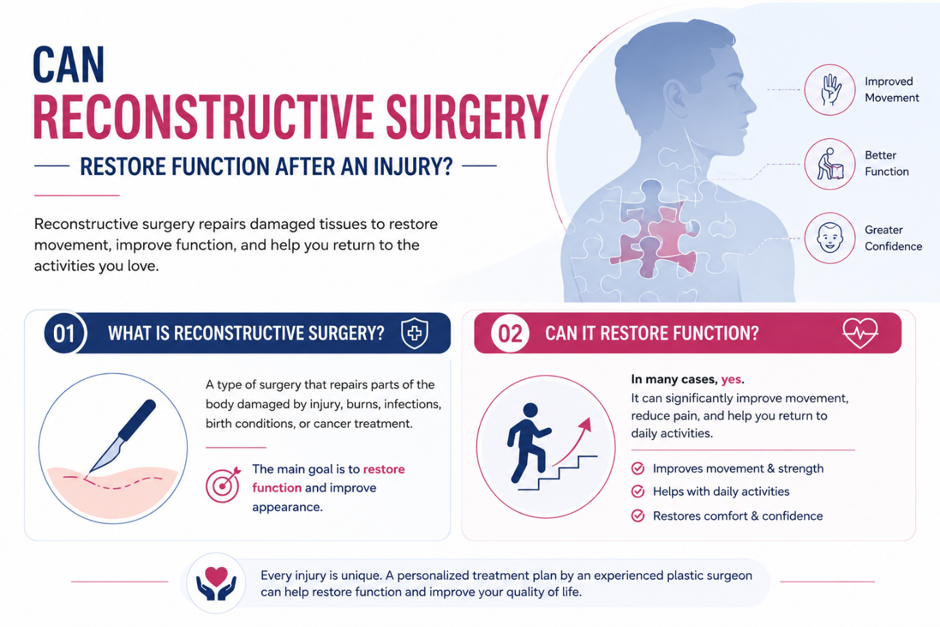
Can Reconstructive Surgery Restore Function After an Injury? Introduction An injury can change your life in an instant. Whether it’s caused by a road accident, a sports injury, a workplace incident, or a severe burn, the damage may affect more than just your appearance. It can also make everyday activities like walking, eating, holding objects, or even smiling more difficult. The good news is that reconstructive surgery can often help restore both function and appearance. While every injury is different, modern reconstructive techniques have helped many people regain movement, improve comfort, and return to their daily routines. What Is Reconstructive Surgery? Reconstructive surgery is a type of surgery that repairs parts of the body damaged by injury, burns, infections, birth conditions, or cancer treatment. The main goal is not simply to improve how a person looks. Instead, it focuses on restoring normal function while also improving appearance whenever possible. A skilled Plastic Surgeon carefully plans each procedure based on the patient’s injury, overall health, and recovery goals. Unlike cosmetic surgery, which is usually performed to enhance appearance, reconstructive surgery is done to repair damaged tissues and help the affected body part work as naturally as possible. Can It Really Restore Function? In many cases, yes. The success depends on factors such as the type of injury, how severe it is, how quickly treatment begins, and the person’s overall health. While surgery cannot always return everything to exactly the way it was before the injury, it can often make a significant improvement. Reconstructive surgery may help restore: Movement in the hands, arms, legs, or face The ability to grip, lift, or hold objects Normal speech or eating after facial injuries Skin coverage after burns or deep wounds Better healing of damaged tissues Improved comfort by reducing pain caused by scar tightening Many patients also experience increased confidence as they recover both physically and emotionally. Common Injuries That May Need Reconstructive Surgery A Plastic Surgeon may recommend reconstructive surgery for several types of injuries, including: Serious Cuts and Tissue Loss Deep wounds sometimes damage skin, muscles, tendons, or nerves. Surgery can repair these structures and help restore movement and strength. Burn Injuries Severe burns can leave scars that tighten the skin and limit movement. Reconstructive procedures can release these tight scars and improve flexibility. Facial Injuries Broken facial bones, damaged soft tissues, or injuries to the nose, lips, or eyelids may affect breathing, vision, speaking, or eating. Surgery aims to restore both function and facial balance. Hand Injuries Hands are involved in almost everything we do each day. Injuries affecting fingers, tendons, or nerves often require specialized reconstructive care to improve movement and coordination. Crush Injuries Heavy machinery accidents or road traffic accidents can cause extensive damage to multiple tissues. These injuries often require staged reconstructive procedures to achieve the best possible recovery. What Types of Procedures Are Used? Every injury is unique, so there is no one-size-fits-all treatment. Depending on the situation, a Plastic Surgeon may use techniques such as: Skin grafts to cover areas where skin has been lost Tissue flaps that move healthy skin, muscle, or other tissue from one area to another Tendon or nerve repair to improve movement and sensation Scar revision surgery to reduce tightness and improve flexibility Bone reconstruction when facial or limb bones have been damaged Sometimes several procedures are performed over weeks or months as healing progresses. Regaining Function and Confidence Recovering from a serious injury can feel overwhelming, but reconstructive surgery has helped countless people regain function, improve comfort, and return to everyday activities. While every person’s recovery is different, the right treatment plan can make a meaningful difference in both physical ability and quality of life. If you have an injury that affects movement, comfort, or daily function, consulting an experienced Plastic Surgeon like Dr. Shraddha Deshpande can help you understand the available options. Early evaluation, appropriate treatment, and dedicated rehabilitation often work together to achieve the best possible outcome.
Can Rhinoplasty Improve Your Breathing and Your Looks?
Can Rhinoplasty Improve Your Breathing and Your Looks? Introduction For something that sits right in the centre of your face, the nose carries a surprising amount of responsibility. It shapes how you look in photos, how you feel about your reflection, and, in ways many people do not realise, how well you breathe every single day. Rhinoplasty, commonly known as a nose job, is one of the most requested cosmetic procedures in the world. But there is a side to it that often gets overlooked in conversations about appearance: its genuine medical value. For many patients, rhinoplasty is not just about aesthetics. It is about finally being able to breathe properly. What Is Rhinoplasty? Rhinoplasty is a surgical procedure that reshapes the nose. Depending on what a patient needs, it can involve changing the size or shape of the nose, refining the tip, smoothing a bump on the bridge, adjusting the nostrils, or correcting internal structural problems that affect airflow. There are two broad types: Cosmetic rhinoplasty: focused on improving the appearance of the nose Functional rhinoplasty: focused on correcting structural issues that interfere with breathing In many cases, both goals are addressed in the same procedure. A patient comes in wanting a straighter nose and discovers that a deviated septum has been quietly making their nights harder than they need to be. One surgery, two meaningful outcomes. When Breathing Is the Real Problem A deviated septum is one of the most common reasons people struggle to breathe through their nose. The septum is the wall of cartilage and bone that divides the nose into two nostrils. When it leans significantly to one side, which happens in a surprising number of people, sometimes from birth, sometimes after an injury, it narrows one or both nasal passages. The result can include: Chronic nasal congestion that does not respond to medication Difficulty breathing through one or both nostrils Loud snoring or disrupted sleep Frequent sinus infections Dry mouth from habitual mouth breathing A septoplasty, the part of the surgery that straightens the septum, is often performed alongside cosmetic reshaping. Together, they are sometimes called septorhinoplasty. Enlarged turbinates (small structures inside the nose that can become swollen and block airflow) can also be addressed during the same procedure, further improving nasal function. The Cosmetic Side: What Can Rhinoplasty Actually Change? This is where expectations need to be realistic — and a good surgeon will always make sure they are. Rhinoplasty can effectively: Reduce or increase the overall size of the nose Smooth out a visible bump or hump on the bridge Refine a bulbous, drooping, or upturned tip Narrow wide nostrils Improve symmetry between the nose and the rest of the face Reconstruct the nose after injury or previous surgery What it cannot do is transform your face into someone else’s, or guarantee a specific outcome down to the millimetre. The nose heals over months, and final results can take up to a year to fully settle. A skilled Plastic Surgeon will always show you realistic before-and-after examples, discuss what is achievable for your unique facial structure, and make sure your expectations are grounded in what surgery can genuinely deliver. Choosing the Right Surgeon This is possibly the most important decision in the entire process. Rhinoplasty is one of the most technically demanding procedures in cosmetic surgery. The nose is complex, sits at the centre of the face, and small changes have large visual effects. When choosing a surgeon, look for: Specialist training and certification in plastic or facial surgery A strong portfolio of rhinoplasty results, both cosmetic and functional A consultation process that feels unhurried and honest Clear communication about risks, realistic outcomes, and recovery A trustworthy Plastic Surgeon will never pressure you into a decision or promise results that sound too good to be true. The right consultation should leave you feeling informed, not rushed. Both Goals Are Worth Having There is sometimes an unspoken sense that wanting to change how your nose looks is somehow less valid than wanting to fix how it functions. That is not a useful distinction. Feeling confident in your appearance is a legitimate and deeply human concern, and when a single procedure can address both form and function, that is genuinely good medicine. Whether breathing is your primary motivation, appearance is, or both carry equal weight, rhinoplasty, when performed by the right hands, can make a meaningful difference to your daily life. Dr. Shraddha Deshpande works with patients navigating exactly this decision every day, helping them understand their options clearly and move forward with confidence, whatever their reason for being there.
Is a Tummy Tuck Safe After Multiple Pregnancies?
Is a Tummy Tuck Safe After Multiple Pregnancies? Introduction After two, three, or more pregnancies, many women find that no amount of exercise or healthy eating restores their abdomen to how it once looked and felt. Loose skin, a protruding belly, and separated stomach muscles are common changes that happen when the body stretches significantly over the years of pregnancy. A tummy tuck, known medically as an abdominoplasty, is one of the most sought-after procedures for women in this situation. But is it safe? And is it the right choice for you? What Actually Changes After Multiple Pregnancies? Every pregnancy stretches the abdominal skin and underlying muscles. After one pregnancy, the body sometimes recovers on its own. After multiple pregnancies, particularly ones that are closely spaced, recovery becomes far less complete. Two specific things tend to cause the most frustration: Loose, excess skin: skin that has been stretched repeatedly loses its elasticity. No cream, exercise, or diet will tighten skin that has genuinely lost its structure. Diastasis recti: this is the separation of the two parallel bands of abdominal muscles that run down the centre of your stomach. It’s extremely common after pregnancy and causes a soft, rounded belly even in women who are otherwise fit and slim. Sit-ups and core exercises can actually make this worse if done incorrectly. A tummy tuck, or abdominoplasty, addresses both of these, removing excess skin and surgically repairing the separated muscles. Is Tummy Tuck Surgery Safe? Yes, for the right candidate, a tummy tuck is a safe, well-established procedure with decades of data behind it. It is one of the most commonly performed plastic surgeries worldwide. That said, it is still surgery, and surgery carries risks. These include bleeding, infection, fluid build-up (seroma), poor wound healing, scarring, blood clots, and reactions to anaesthesia. Most of these risks are low in healthy patients and can be further minimised by choosing an experienced, board-certified plastic surgeon and following pre- and post-operative instructions carefully. The risk profile changes if a woman smokes, has uncontrolled diabetes, obesity, or certain cardiovascular conditions. These are important conversations to have during a consultation, not reasons to avoid enquiring, but factors that need to be assessed individually. Types of Tummy Tuck Surgery Many people don’t realise there are different types of tummy tucks, and the right one depends on your specific anatomy and concerns. Full abdominoplasty: the most comprehensive option. It addresses the entire abdomen, repairs the muscle separation, removes a significant amount of excess skin, and repositions the belly button. Best for women with significant changes after multiple pregnancies. Mini tummy tuck: targets only the lower abdomen, below the belly button. Suitable for women with minimal loose skin concentrated in the lower area and no significant muscle separation. Extended abdominoplasty: goes beyond the abdomen to address the flanks and lower back. Often chosen by women who have also lost significant weight. Your surgeon will assess which approach is appropriate during your consultation. After Surgery: Protecting Your Results What you do after surgery matters just as much as the procedure itself. Wear your compression garment as instructed; it helps reduce swelling and supports healing. Keep the incision clean and dry as directed. Avoid sun exposure on the scar for at least a year. UV light darkens scars significantly. Maintain a stable weight. Significant fluctuations will affect your results. Attend all follow-up appointments so your surgeon can monitor your recovery. A Final Word on Tummy Tuck Safety A tummy tuck after multiple pregnancies is safe for the right candidate, and for many women, it delivers results that no other option can. It’s not a decision to take lightly, and it’s not something to rush. But when the timing is right, the health criteria are met, and the procedure is performed by a qualified surgeon, it’s a well-supported, commonly performed operation with high patient satisfaction. If you’re considering this step, start with a proper consultation with a board-certified plastic surgeon. Someone like Dr Shraddha Deshpande, with expertise in post-pregnancy body contouring, can evaluate your individual situation, set realistic expectations, and guide you toward the decision that’s right for your body and your life.
Can Chemical Peels Really Make My Skin Look Younger?
Can Chemical Peels Really Make My Skin Look Younger? Introduction Younger-looking skin is something a lot of people want, and with so many treatments out there, it’s easy to feel confused about what actually works. Chemical peels have been around for decades, and they remain one of the most popular options at dermatology clinics worldwide. But do they live up to the hype? Let’s break it down in plain, honest terms. What Exactly Is a Chemical Peel? A chemical peel is a skin treatment where a solution usually containing acids like glycolic acid, lactic acid, or trichloroacetic acid (TCA) is applied to the skin. It works by gently removing the outer layers of skin, allowing fresher, newer skin to surface. Think of it like this: your skin is constantly renewing itself, but as you age, that process slows down. Dead skin cells hang around longer, making the complexion look dull, uneven, or tired. A chemical peel speeds up that renewal process, giving skin a push it might not be giving itself anymore. The name sounds a little dramatic, but the actual experience ranges from barely-there tingling (with lighter peels) to a more intense process (with deeper ones). The Three Types of Chemical Peels Not all peels are the same. They’re generally grouped into three levels: Superficial peels use mild acids, most commonly glycolic or lactic acid. These work on just the very top layer of skin. They’re gentle, need no recovery time, and are great for brightening dull skin, evening out skin tone, and giving an overall fresher look. Many people get these monthly as a maintenance treatment. Medium peels go a little deeper. TCA is commonly used here. These target fine lines, sun damage, and mild scarring. You might experience some redness and peeling for a few days afterward, similar to a mild sunburn, but the results are more noticeable. Deep peels reach the deeper layers of skin and can produce dramatic improvements in wrinkles, deep scars, and significant sun damage. These require proper recovery time, sometimes a week or two, and are usually done only once. They’re always performed by a trained medical professional and aren’t suitable for everyone. What Can Chemical Peels Actually Improve? Here’s where it helps to be realistic. Chemical peels can genuinely help with: Fine lines and mild wrinkles, especially around the mouth and eyes Sun damage and age spots, those brown patches that appear with years of sun exposure Uneven skin tone and dullness Mild acne scars and some active acne Rough skin texture Enlarged-looking pores What they won’t fix: deep wrinkles, sagging skin, or very prominent scars. For those concerns, other treatments like fillers or laser therapy may be more appropriate. Are Chemical Peels Safe for Everyone? For most people, yes – when done correctly. But there are a few things to keep in mind. Skin tone matters. People with darker skin tones need to be more careful with medium and deep peels, as there’s a higher risk of temporary skin darkening (post-inflammatory hyperpigmentation). Superficial peels are generally safer for a wider range of skin tones, but it’s important to see a qualified professional who has experience with your skin type. Sun exposure. After any peel, your skin is more sensitive to the sun. Sunscreen isn’t optional; it’s essential. Skipping it can undo your results and cause new pigmentation issues. Active skin conditions. If you have active cold sores, eczema flare-ups, or rosacea, peels may not be recommended until your skin settles. Always consult plastic Surgeon before getting a peel. A good professional will assess your skin, recommend the right type, and tell you honestly if you’re not a suitable candidate. What to Expect — and How Many Sessions? Before your peel, a doctor may ask you to prep your skin with specific products for a few weeks to improve results. During the treatment, you’ll feel tingling or warmth. Superficial peels are comfortable, while deeper ones may need numbing cream. After, depending on depth, expect a subtle glow (superficial) or visible peeling and redness for a few days (medium to deep). Moisturising and sun protection are essential during recovery. As for sessions, superficial peels work best in a series of four to six spaced a few weeks apart, with monthly maintenance after. Medium peels may need two to three sessions. Deep peels are typically a one-time treatment, with results lasting months when paired with a good skincare routine. The Honest Answer So, can chemical peels make your skin look younger? Yes genuinely, and often noticeably. They’re one of the most evidence-backed cosmetic treatments available, and when done by the right professional with the right peel for your skin type, the results can be impressive. They’re not magic. They won’t erase twenty years overnight. But for improving skin texture, evening out tone, softening fine lines, and restoring a fresher look they work. If you’re considering a peel, start with a consultation. The right guidance makes all the difference between a treatment that transforms your skin and one that disappoints or worse, causes harm. plastic surgeon like Dr. Shraddha Deshpande, who specialise in cosmetic and skin treatments, can assess your skin type, recommend the most suitable peel, and walk you through the process so you feel confident every step of the way.
How Buccal Fat Removal Can Help Create a Slimmer Facial Appearance
How Buccal Fat Removal Can Help Create a Slimmer Facial Appearance Introduction Many people maintain a healthy lifestyle, exercise regularly, and still feel that their face looks fuller than they would like. If you often feel that your cheeks appear round or chubby despite being fit, you may have naturally prominent buccal fat pads. Buccal Fat Removal is a cosmetic facial contouring procedure designed to reduce fullness in the lower cheeks and create a more sculpted facial appearance. This treatment has become increasingly popular among individuals seeking a slimmer, more defined face without dramatic changes to their natural features. What Is Buccal Fat Removal? Buccal fat removal is a cosmetic surgical procedure that reduces the size of the buccal fat pads—naturally occurring pockets of fat located deep within the cheeks. These fat pads contribute to the shape and fullness of the face. While some people naturally have smaller buccal fat pads, others may have larger ones that create a rounder or “baby-faced” appearance. The procedure involves removing a portion of this fat through a small incision made inside the mouth, leaving no visible external scars. How Buccal Fat Removal Can Help Create a Slimmer Facial Appearance One of the primary benefits of buccal fat removal is enhanced facial definition. Improved Cheek Contours Reducing excess cheek fat can help create a more sculpted appearance by highlighting the natural contours of the face. Better Jawline Definition Many patients notice improved facial balance and a more defined transition between the cheeks and jawline after recovery. Reduced Facial Fullness The procedure targets stubborn cheek fullness that may not respond to diet or exercise. Natural-Looking Results When performed by a skilled surgeon, buccal fat removal enhances facial proportions while preserving a natural appearance. How Is the Procedure Performed? Buccal fat removal is typically performed as an outpatient procedure. The process generally includes: Administration of local anesthesia or sedation. A small incision inside the cheek. Gentle removal of the desired amount of buccal fat. Closure of the incision with dissolvable stitches. Since the incision is inside the mouth, there are no visible scars on the face. The procedure usually takes less than an hour, although treatment times may vary. Benefits of Buccal Fat Removal Patients often choose buccal fat removal for several reasons: Creates a slimmer facial appearance Enhances cheekbone visibility Improves facial harmony and balance Provides long-lasting results Leaves no visible external scars Can be combined with other facial cosmetic procedures Results continue to improve as swelling subsides over the following weeks and months. Is It Often Combined With Other Procedures? Yes, frequently. Many patients choose to combine buccal fat removal with: Chin augmentation for overall facial harmony Rhinoplasty (nose reshaping) to balance facial proportions Jawline contouring using fillers or surgery Liposuction of the neck or jowl area for a more complete lower-face refinement Combination procedures can be more efficient and sometimes more cost-effective than multiple separate surgeries — but they also require more planning and recovery time. Discuss your full goals honestly during your consultation so your surgeon can help you map a realistic approach. Enhancing Facial Balance with Confidence A naturally fuller face can sometimes make facial features appear less defined, even in individuals who are otherwise fit and healthy. Buccal Fat Removal offers a safe and effective way to create a slimmer facial appearance, enhance facial contours, and improve overall facial balance. If you are considering facial contouring surgery, a personalized consultation with expert plastic surgeon Dr. Shraddha Deshpande can help determine whether buccal fat removal is the right option for your aesthetic goals. With proper evaluation, expert surgical care, and realistic expectations, patients can achieve refined, natural-looking results that complement their unique facial features.
Upper vs Lower Blepharoplasty: What’s the Difference and Which One Do You Need?
Upper vs Lower Blepharoplasty: What’s the Difference and Which One Do You Need? Introduction Have you looked in the mirror lately and noticed your eyes seem more tired or older than you actually feel? You’re not imagining it. The skin around the eyes is among the thinnest on the entire face — and it’s usually the first area to show signs of ageing, fatigue, or genetic changes. For many patients, the question isn’t whether to consider eyelid surgery, but which type is right for them. Understanding the difference between upper vs lower blepharoplasty can help you walk into your consultation with confidence — and make a genuinely informed decision about your care. What Is Blepharoplasty, and Why Do People Consider It? Blepharoplasty is a surgical procedure that corrects drooping, puffiness, or excess skin around the eyelids. It can be performed on the upper eyelids, lower eyelids, or both — depending on each patient’s individual concerns. People seek blepharoplasty for different reasons: Hooded upper eyelids that make the eyes look heavy or half-closed Persistent under-eye bags that don’t improve with rest or skincare Loose, wrinkled skin beneath the eyes Upper eyelid skin that is beginning to interfere with peripheral vision A general appearance of chronic fatigue — even when you feel perfectly fine Some patients want functional improvement. Others are looking for aesthetic refreshment. Often, it’s a combination of both. Upper Blepharoplasty: Lifting the Weight from Your Eyes Upper eyelid surgery focuses on the skin, muscle, and sometimes fat above the eye. Over time, gravity and reduced skin elasticity cause the upper eyelid to droop — a condition called ptosis (pronounced “toe-sis”). In milder cases, this simply looks like tired eyes. In more pronounced cases, the excess skin can actually fold over the lash line and narrow your field of vision. What the Procedure Involves During upper blepharoplasty, the surgeon makes a precise incision along the natural crease of the upper eyelid — a placement chosen specifically so the scar remains almost invisible once healed. Through this incision, excess skin is carefully removed, and any bulging fat pockets are repositioned or reduced. The result is a more open, refreshed appearance. Your eyes don’t look “done.” They look rested. Who Typically Benefits Patients aged 40 and above with noticeable upper eyelid heaviness Anyone whose upper eyelid skin touches or crosses the lash line Patients who feel their eyes look consistently tired despite adequate sleep Those with a hereditary tendency toward drooping upper lids Lower Blepharoplasty: Addressing Under-Eye Bags and Hollows The lower eyelid is a different challenge entirely. Here, the concern is usually fat herniation — where the fat pads that cushion the eye begin to push forward, creating visible bags or puffiness beneath the eye. Some patients also develop a hollowed groove called the tear trough, which creates a shadowed appearance even in good lighting. What the Procedure Involves Lower blepharoplasty can be approached in two ways, depending on what needs to be corrected: Transcutaneous approach — An incision is made just below the lower lash line. This allows access to excess skin, muscle, and fat. Transconjunctival approach — The incision is hidden inside the lower eyelid, with no visible external scar. This is often preferred when fat redistribution is the primary goal and the skin quality is still reasonably good. Fat may be removed, redistributed to fill hollow areas, or a combination of both. In some cases, a small amount of skin is also tightened. Upper vs Lower Blepharoplasty: A Side-by-Side Comparison # Upper Blepharoplasty Lower Blepharoplasty Primary concern Drooping, hooded upper lids Under-eye bags, hollows, wrinkles Incision Location Natural upper eyelid crease Below the lash line or inside the eyelid Main Tissues Addressed Skin, muscle, fat Fat, skin, muscle Recovery Time 7–10 days 10–14 days Can it affect vision? Yes, in functional cases Rarely Can You Have Both Done at the Same Time? Yes — and many patients do. When both the upper and lower eyelids need attention, combining the procedures is common. It reduces overall recovery time, lowers surgical risk compared to two separate procedures, and produces a more balanced, harmonious result. Dr. Shraddha Deshpande will assess both areas during your consultation and discuss what makes the most sense for your specific anatomy and goals. A Personalized Approach to Eyelid Rejuvenation Understanding the difference between Upper vs Lower Blepharoplasty is the first step toward choosing the right treatment for your needs. Upper blepharoplasty focuses on correcting droopy upper eyelids, while lower blepharoplasty targets under-eye bags and puffiness. Some patients benefit from one procedure, while others achieve the best results with both. If you’re bothered by tired-looking eyes, sagging eyelids, or persistent under-eye bags, a personalized consultation can help determine the most suitable approach. Expert plastic surgeon Dr. Shraddha Deshpande offers expert evaluation and customized treatment plans designed to enhance your appearance while maintaining natural-looking results. Schedule a consultation to explore your options and take the next step toward brighter, more refreshed eyes.
Breast Lift After Pregnancy: How to Regain Shape and Confidence
Breast Lift After Pregnancy: How to Regain Shape and Confidence Introduction Pregnancy is one of life’s most beautiful journeys — but it’s also one that changes your body in ways nobody quite prepares you for. Many women find that after childbirth and breastfeeding, their breasts look and feel very different from how they used to. They may appear deflated, sit lower on the chest, or have nipples pointing downward. If this sounds familiar, you’re far from alone. A breast lift after pregnancy — medically known as mastopexy — is one of the most commonly requested procedures among mothers who want to feel at home in their bodies again. This article walks you through everything you need to know, from why it happens to what recovery looks like, so you can make a well-informed, confident decision. Why Does Pregnancy Change the Shape of Your Breasts? During pregnancy, hormonal changes prepare the body for breastfeeding. The breasts become larger as milk-producing glands develop. After breastfeeding ends, breast tissue often shrinks, but the skin and supporting ligaments may not fully return to their previous state. This can result in: Loss of breast firmness Sagging or drooping breasts Downward-pointing nipples Stretched breast skin Uneven breast appearance These changes are completely natural, but many women seek treatment to restore their pre-pregnancy breast contours. What Is a Breast Lift? A breast lift, medically known as mastopexy, is a cosmetic surgical procedure that lifts and reshapes sagging breasts. The surgery removes excess skin, tightens surrounding tissue, and repositions the nipples to create a firmer and more youthful appearance. Unlike breast augmentation, a breast lift focuses on improving shape and position rather than increasing breast size. Signs That You May Benefit from a Breast Lift Visible Breast Sagging One of the most common reasons women seek a breast lift is noticeable breast drooping. Loss of Breast Shape Breasts may appear flattened or elongated after pregnancy and breastfeeding. Stretched Skin Significant breast enlargement during pregnancy can stretch the skin, making it difficult to regain firmness naturally. Reduced Confidence Many women feel self-conscious about changes in their appearance. A breast lift can help improve body image and self-esteem. How Is a Breast Lift Performed? The exact surgical technique depends on the degree of breast sagging and your aesthetic goals. Typically, the procedure involves: Making carefully planned incisions. Removing excess skin. Reshaping breast tissue. Repositioning the nipple and areola. Closing the incisions with sutures. The surgery is usually performed under general anesthesia and may take two to three hours. Can a Breast Lift Be Combined with Other Procedures? Yes. Many women choose to combine a breast lift with other procedures as part of a post-pregnancy body contouring plan. Common combinations include: Breast augmentation for added volume Breast reduction for oversized breasts Tummy tuck surgery Liposuction Your surgeon will recommend the most appropriate approach based on your goals and anatomy. Reclaim Your Confidence After Pregnancy Changes in breast shape after pregnancy are common and can affect how a woman feels about her body. A breast lift after pregnancy offers an effective solution for restoring firmer, more youthful-looking breasts while helping improve self-confidence. If you are considering a breast lift and want personalized guidance, consult the best plastic surgeon, Dr. Shraddha Deshpande. With expert evaluation and a patient-focused approach, she can help you understand your options and create a treatment plan tailored to your goals.
Botox vs Dermal Fillers: What’s Better for Wrinkles and Facial Aging?
Botox vs Dermal Fillers: What’s Better for Wrinkles and Facial Aging? Introduction You’re standing in front of the mirror, noticing fine lines that weren’t there a few years ago. Maybe it’s the creases between your brows when you frown, or the smile lines that no longer fade when your face relaxes. You’ve heard about Botox and dermal fillers — but which one actually works? And more importantly, which one is right for you? This is one of the most common questions patients bring to my clinic. Both treatments are popular, both are minimally invasive, and both can genuinely turn back the clock — but they work in completely different ways. Understanding that difference is the key to making a confident, informed decision. What Causes Wrinkles and Facial Aging? Before choosing any treatment, it helps to understand why wrinkles form in the first place. Facial aging isn’t a single process — it’s a combination of several things happening at once. Muscle movement plays a big role. Every time you squint, smile, or furrow your brows, the underlying muscles contract. Over years of repetitive motion, the skin above those muscles develops creases — these are called dynamic wrinkles. Volume loss is the other major factor. As we age, our bodies produce less collagen and hyaluronic acid — the substances that keep skin plump and firm. Fat pads in the face also shrink and shift downward. The result? Hollowed cheeks, deeper nasolabial folds (the lines from your nose to the corners of your mouth), and a tired, sunken appearance. Two different problems. Two different solutions. So, What Exactly Is Botox? Botox is the brand name for botulinum toxin type A — a purified protein that temporarily relaxes specific facial muscles. When injected in small, precise doses, it prevents those muscles from contracting as forcefully. This makes it particularly effective for dynamic wrinkles — the ones that appear with movement: Forehead lines Frown lines (the “11s” between the brows) Crow’s feet around the eyes Bunny lines on the nose Lip lines caused by puckering Results typically appear within 3–7 days and last around 3–6 months. The treatment itself takes about 15–20 minutes. There’s no downtime, though some patients experience mild redness or swelling at injection sites for a day or two. One thing to set expectations correctly: Botox doesn’t fill or plump anything. If the lines on your face are present even when your face is fully relaxed, Botox alone may not give you the result you’re hoping for. What Are Dermal Fillers and How Do They Work? Dermal fillers are injectable substances — most commonly hyaluronic acid (HA) — that physically add volume beneath the skin. Think of them as a soft cushion being placed under areas that have lost their fullness. They work well for static wrinkles and volume loss: Nasolabial folds (smile lines) Marionette lines (lines from the corners of the mouth downward) Hollow under-eyes (tear troughs) Flat or deflated cheeks Thinning lips Jawline and chin definition Results are immediate and can last anywhere from 6 months to 2 years depending on the type of filler used and the area treated. Hyaluronic acid fillers also have the advantage of being reversible — a dissolving enzyme called hyaluronidase can be used to remove them if needed. Different fillers have different consistencies. Thicker fillers are used for deeper structural work like cheeks and jawlines; lighter, softer fillers are used for delicate areas like under the eyes or lips. Botox vs Dermal Fillers: A Side-by-Side Look Feature Botox Dermal Fillers How it works Relaxes muscles Adds volume Best For Dynamic wrinkles (movement-related) Static wrinkles, volume loss Results Visible 3-7 Days Immediately Duration 3-6 months 6–24 months Reversible Not directly Yes (HA fillers) Common Areas Forehead, eyes, brows Cheeks, lips, folds, under-eyes Downtime Minimal Minimal Which Treatment Is Better for Wrinkles and Facial Aging? The Answer Depends on Your Skin Concerns There is no one-size-fits-all answer. The better option depends on the type of wrinkles and aging changes you have. Botox May Be Better If You Have: Forehead wrinkles Crow’s feet Frown lines Early signs of aging Repetitive expression lines Dermal Fillers May Be Better If You Have: Hollow cheeks Deep smile lines Thin lips Facial volume loss Sagging appearance Sometimes, Combining Both Gives the Best Results Many patients benefit from a combination approach called a “liquid facelift.” For example: Botox can relax forehead lines Fillers can restore cheek volume Together, they create a balanced and refreshed appearance This combined treatment often produces more natural and youthful results than using either treatment alone. Making the Right Choice for Facial Aging Choosing between Botox and dermal fillers depends on your specific aging concerns and desired results. Botox is ideal for expression lines caused by muscle movement, while fillers help restore volume and smooth deeper wrinkles. In many cases, combining both treatments gives a more natural and youthful appearance without surgery. As per Dr. Shraddha Deshpande, a proper facial assessment is essential for safe and effective results. Consulting an expert Plastic Surgeon can help you choose the right treatment for your skin and achieve a refreshed, confident look.