Is a Tummy Tuck Safe After Multiple Pregnancies?
Introduction
After two, three, or more pregnancies, many women find that no amount of exercise or healthy eating restores their abdomen to how it once looked and felt. Loose skin, a protruding belly, and separated stomach muscles are common changes that happen when the body stretches significantly over the years of pregnancy.
A tummy tuck, known medically as an abdominoplasty, is one of the most sought-after procedures for women in this situation. But is it safe? And is it the right choice for you?
What Actually Changes After Multiple Pregnancies?
Every pregnancy stretches the abdominal skin and underlying muscles. After one pregnancy, the body sometimes recovers on its own. After multiple pregnancies, particularly ones that are closely spaced, recovery becomes far less complete.
Two specific things tend to cause the most frustration:
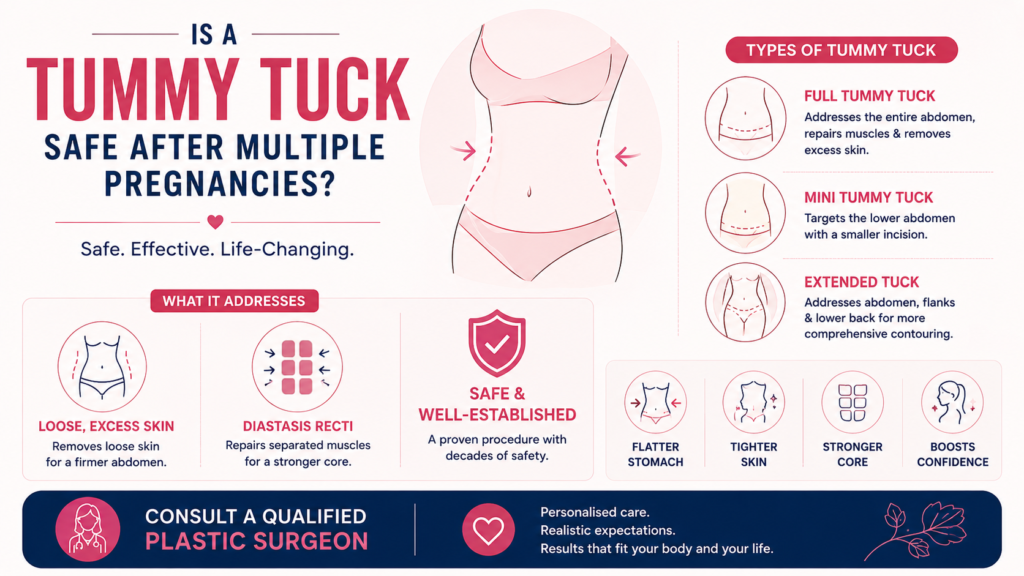
Loose, excess skin: skin that has been stretched repeatedly loses its elasticity. No cream, exercise, or diet will tighten skin that has genuinely lost its structure.
Diastasis recti: this is the separation of the two parallel bands of abdominal muscles that run down the centre of your stomach. It’s extremely common after pregnancy and causes a soft, rounded belly even in women who are otherwise fit and slim. Sit-ups and core exercises can actually make this worse if done incorrectly.
A tummy tuck, or abdominoplasty, addresses both of these, removing excess skin and surgically repairing the separated muscles.
Is Tummy Tuck Surgery Safe?
Yes, for the right candidate, a tummy tuck is a safe, well-established procedure with decades of data behind it. It is one of the most commonly performed plastic surgeries worldwide.
That said, it is still surgery, and surgery carries risks. These include bleeding, infection, fluid build-up (seroma), poor wound healing, scarring, blood clots, and reactions to anaesthesia. Most of these risks are low in healthy patients and can be further minimised by choosing an experienced, board-certified plastic surgeon and following pre- and post-operative instructions carefully.
The risk profile changes if a woman smokes, has uncontrolled diabetes, obesity, or certain cardiovascular conditions. These are important conversations to have during a consultation, not reasons to avoid enquiring, but factors that need to be assessed individually.
Types of Tummy Tuck Surgery
Many people don’t realise there are different types of tummy tucks, and the right one depends on your specific anatomy and concerns.
Full abdominoplasty: the most comprehensive option. It addresses the entire abdomen, repairs the muscle separation, removes a significant amount of excess skin, and repositions the belly button. Best for women with significant changes after multiple pregnancies.
Mini tummy tuck: targets only the lower abdomen, below the belly button. Suitable for women with minimal loose skin concentrated in the lower area and no significant muscle separation.
Extended abdominoplasty: goes beyond the abdomen to address the flanks and lower back. Often chosen by women who have also lost significant weight.
Your surgeon will assess which approach is appropriate during your consultation.
After Surgery: Protecting Your Results
What you do after surgery matters just as much as the procedure itself.
- Wear your compression garment as instructed; it helps reduce swelling and supports healing.
- Keep the incision clean and dry as directed.
- Avoid sun exposure on the scar for at least a year. UV light darkens scars significantly.
- Maintain a stable weight. Significant fluctuations will affect your results.
- Attend all follow-up appointments so your surgeon can monitor your recovery.
A Final Word on Tummy Tuck Safety
A tummy tuck after multiple pregnancies is safe for the right candidate, and for many women, it delivers results that no other option can. It’s not a decision to take lightly, and it’s not something to rush. But when the timing is right, the health criteria are met, and the procedure is performed by a qualified surgeon, it’s a well-supported, commonly performed operation with high patient satisfaction.
If you’re considering this step, start with a proper consultation with a board-certified plastic surgeon. Someone like Dr Shraddha Deshpande, with expertise in post-pregnancy body contouring, can evaluate your individual situation, set realistic expectations, and guide you toward the decision that’s right for your body and your life.