Why Is My Face Looking Older Than My Age?
Introduction
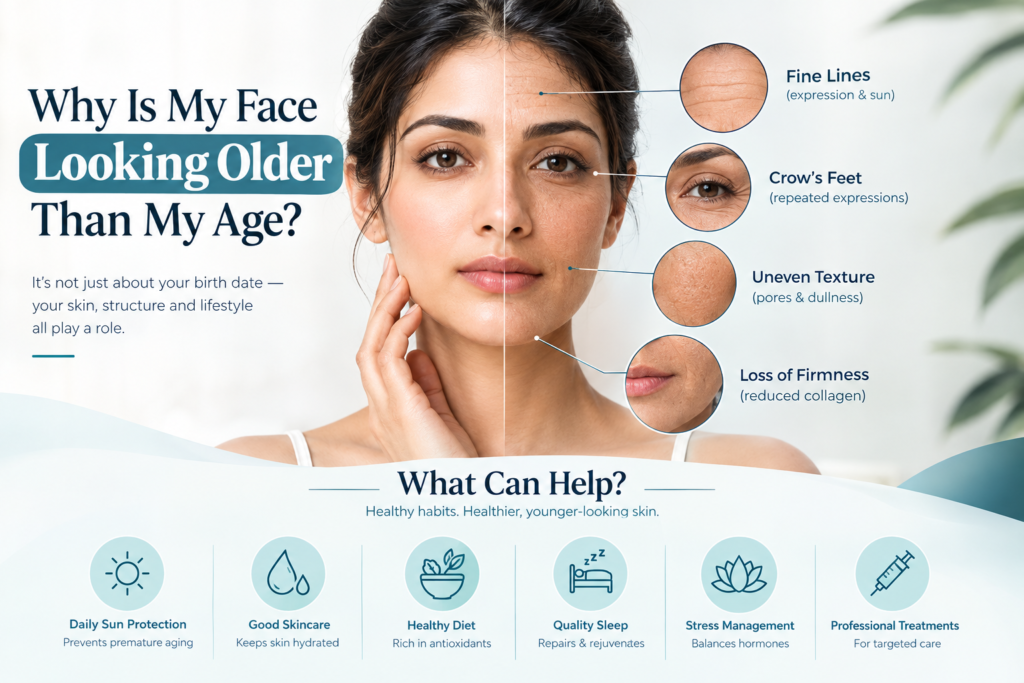
Ageing is not just about years. Two people of the same age can look very different, because the face responds to many things at once.
Here are the most common reasons:
- Genetics: If your parents developed jowls or hooded eyes early, you may too.
- Sun exposure: Years of unprotected sun damage the skin’s support fibres. This is a big factor in India’s strong sunlight.
- Sudden weight changes: Losing weight quickly can leave loose skin behind.
- Smoking and pollution: Both reduce blood flow to the skin and speed up wrinkles.
- Stress and poor sleep: They show up as dullness, dark circles and a tired look.
Nothing here is your fault. Most of it is a mix of biology and environment.
Plastic Surgery Is Becoming More Natural
Your face is more than skin. Underneath sit fat pads, muscles and bone that give it shape and fullness.
With time, several things change together:
- Collagen and elastin drop. These proteins keep skin firm and bouncy. Production starts slowing in our mid-twenties.
- Facial fat shifts downward. Cheeks that were once full begin to sag, and jowls appear along the jawline.
- Bone thins slightly. This can make eyes look more hollow and the face less supported.
- Skin gets thinner and drier. Fine lines and creases show up more easily.
When these changes arrive earlier than expected, people say their face looks older than their age.
Which Daily Habits Make Skin Age Faster?
Small habits add up over the years. Some of the biggest culprits are these.
Does sun exposure really matter that much?
Yes, and it is the number one cause. Ultraviolet (UV) rays break down collagen, and the damage builds silently over the years. Many people skip sunscreen because their skin is darker or the day is cloudy. UV rays still get through.
What about smoking, sleep and stress?
- Smoking cuts blood flow to the skin and speeds up wrinkles, especially around the mouth.
- Poor sleep stops the skin from repairing itself overnight. It also leaves dark circles and a dull look.
- Constant stress raises hormones that can weaken skin over time.
- Very little water and a lot of sugary food can leave skin looking dull and tired.
How Do I Know Whether It's Skin Damage or Deeper Sagging?
This question matters because the two need different solutions.
Signs of surface skin aging:
- Fine lines and rough texture
- Dark spots and uneven colour
- Dryness and dullness
Signs of deeper sagging:
- Jowls along the jaw
- Loose skin or bands under the chin and neck
- Deep folds from the nose to the mouth corners
- Cheeks that have lost their lift
Surface problems often respond well to skincare and light treatments. Deeper sagging usually does not, because the support structure underneath has loosened.
Can Skincare and Non-Surgical Treatments Help?
For early or mild signs, absolutely. Many people get good results with:
- Daily sunscreen (the most valuable habit you can build)
- Vitamin C in the morning and retinoids at night, as advised by a doctor
- Chemical peels and laser treatments for pigmentation and texture
- Fillers to restore lost volume
- Radiofrequency or ultrasound treatments for mild tightening
These work well within limits. They cannot lift heavy sagging or remove loose skin. That is where surgery enters the conversation.
When Should I Consider Facelift Surgery?
A facelift, also called rhytidectomy, lifts and tightens the deeper tissues of the face and removes extra skin. It is designed to soften jowls, restore the jawline and smooth deep folds.
You may be a good candidate if:
- Your jawline has lost its definition
- You have deep folds around the nose and mouth
- Your neck looks loose or “banded”
- Fillers and other treatments no longer give the results you want
- You are in good general health and have realistic expectations
How Can I Keep My Results Looking Good?
Surgery gives you a fresh start. Daily care helps you keep it.
- Use sunscreen every day, even indoors near windows
- Drink enough water and eat fresh, balanced meals
- Sleep seven to eight hours when possible
- Stay away from smoking
- Keep a simple skincare routine your doctor approves
Results from a facelift often last close to ten years or longer, and good habits can stretch that further.
How Do I Choose the Right Doctor?
This decision matters more than any procedure detail. Look for a qualified plastic surgeon who takes time to listen, explains risks openly and shows realistic before-and-after results.
Ask questions. A good doctor will welcome them. You should feel heard, not rushed or pressured.
If you are considering facelift surgery in Mumbai, a personal consultation with Dr. Shraddha Deshpande can help you understand which options suit your face, your health and your goals.
Final Thoughts
Looking older than you feel can affect confidence, and wanting to change that is completely valid. Facial ageing is natural, and it has many causes, from genetics to sun exposure.
Simple daily care can slow the process. Non-surgical treatments help in the early stages. When sagging becomes more noticeable, facelift surgery can restore a natural, refreshed look when done thoughtfully.
You don’t have to decide today. If you are curious, book a consultation with Dr. Shraddha Deshpande to talk through your concerns and explore your options at your own pace.