Why Do I Get Rashes Under My Breasts?
Introduction
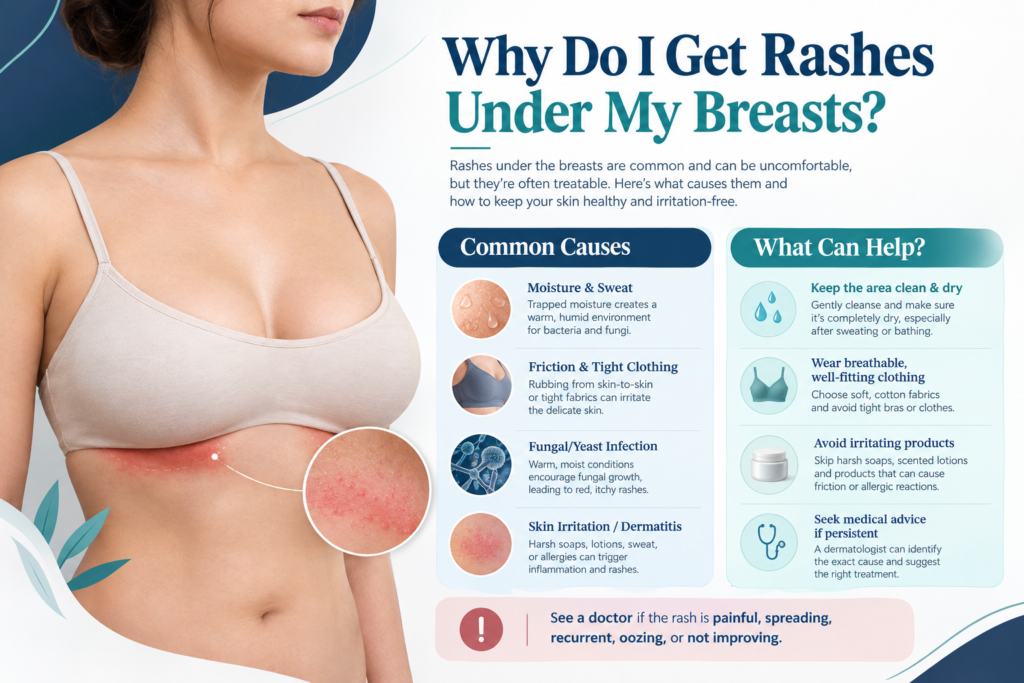
The area under the breast is a natural skin fold. It is warm, closed and often damp, which is exactly what skin irritation loves.
Doctors call this rash intertrigo. In simple words, it is inflammation that happens when two skin surfaces rub together in a moist area.
Common triggers include:
- Sweat that can’t evaporate, especially in humid weather
- Friction from skin rubbing against skin or against a bra
- Larger or heavier breasts, which press down and trap moisture
- Tight or synthetic bras that don’t let skin breathe
- Weight gain, diabetes or hormonal changes, which raise the risk
What Does This Rash Look and Feel Like?
Most women notice it slowly. It may begin as mild redness and turn into something more bothersome.
Signs to watch for:
- Red or brownish patches under the breast
- Itching, burning or stinging
- Skin that looks raw, cracked or moist
- A sour or unpleasant smell
- Small red bumps around the edges
Often, a yeast (fungal) infection joins the irritation. This is why the rash can seem stubborn.
Why Does It Keep Coming Back Under the Breasts?
Here is what many women tell us: “I treat it, it goes away, and then it returns.”
That happens because the cause is still there. Moisture and friction don’t disappear once the rash heals.
If your breasts are large, the fold stays deep and warm all day. Creams can calm the skin, but they can’t change the shape of the area. That is why the rash returns, especially in summer and monsoon.
What Can I Do at Home for Relief?
Simple habits can make a real difference. Try these:
- Wash gently with mild soap and warm water once or twice a day.
- Dry thoroughly. Pat the area dry, or use a hairdryer on a cool setting.
- Wear soft cotton bras that fit well and have wide, supportive bands.
- Use moisture-wicking fabric during workouts, and change out of sweaty clothes quickly.
- Try a clean, soft cotton cloth tucked under the breast to absorb moisture.
- Avoid heavy creams and oils on the fold, as they can trap dampness.
Do not scratch, even when it itches badly. Scratching can break the skin and invite infection.
When Should I See a Doctor?
Home care is fine for mild cases. But some signs mean you need medical help.
See a doctor if:
- The rash lasts more than a week or two despite care
- The skin is cracked, oozing or painful
- You notice a strong smell or pus
- You have a fever
- The rash keeps returning every few months
A doctor may prescribe an antifungal or a mild steroid cream, depending on the cause. If you have diabetes, get any recurring rash checked early.
Can Breast Reduction Surgery Help?
For some women, yes. When large breasts are the underlying cause, treating only the skin gives temporary relief.
Breast reduction surgery (reduction mammoplasty) removes extra breast tissue, fat and skin to bring breast size in proportion to the body. This lightens the load and reduces the depth of the fold where moisture gathers.
Many women find relief from more than rashes. They also notice:
- Less back, neck and shoulder pain
- No more deep bra-strap grooves
- Easier exercise and daily movement
- Better posture and comfort
- More confidence in clothes
You may be a good candidate if you have ongoing rashes, pain or discomfort, your symptoms haven’t improved with other measures, and you are in good general health.
It’s a personal decision, and it should never feel rushed. Your surgeon will discuss your goals, the risks and what results are realistic.
Final Thoughts
Rashes under the breasts are common, treatable and nothing to be embarrassed about. Keeping the area clean, dry and well supported helps many women.
But if the problem keeps returning and comes with pain or discomfort, larger breasts may be the reason. In such cases, breast reduction surgery in Mumbai can offer lasting relief and a more comfortable life.
You don’t have to figure this out alone. If you’d like to understand your options, consider booking a consultation with Dr. Shraddha Deshpande. She can examine you, listen to your concerns and guide you toward what is right for you.