Can an Old Nose Injury Cause Breathing Problems?
Introduction
Maybe it was a fall from a bicycle as a child. Maybe a cricket ball, a scooter accident or a hard knock during a fight years ago. The nose healed, the swelling went down, and life moved on.
Then, years later, one nostril never seems to open fully. You may wonder if the old injury has anything to do with it. Many patients ask about rhinoplasty for exactly this reason, and the connection is often real.
Can an Old Nose Injury Really Cause Breathing Problems?
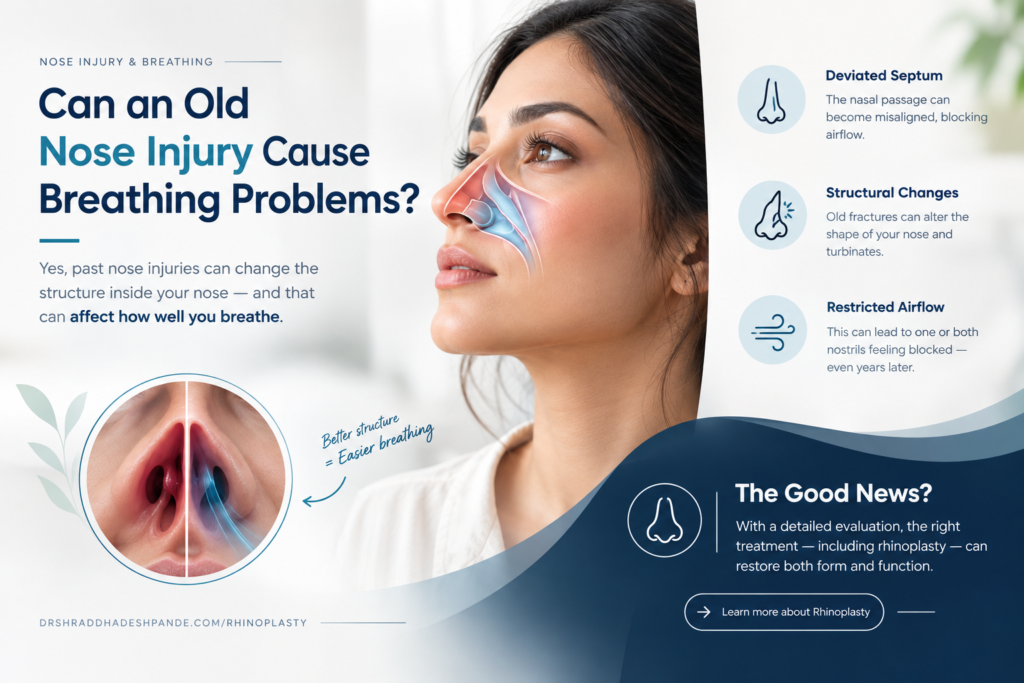
It can. The nose is made of bone at the top and cartilage (a firm, flexible tissue) below. Inside, a thin wall called the septum divides the two nostrils.
A blow can push any of these parts out of place. Because the nose is soft and quick to heal, it may set in a slightly crooked position without you noticing. The trouble often shows up slowly, sometimes ten or twenty years later.
What Signs Should I Look Out For?
Symptoms often creep in slowly, so many people get used to them. Watch for these:
- One nostril that always feels more blocked than the other
- Breathing through the mouth, especially at night
- Loud snoring or disturbed sleep
- Frequent nosebleeds or dry nose
- Repeated sinus infections
- Headaches or a feeling of pressure around the nose and cheeks
- A nose that looks bent, crooked or flattened since the injury
If you recognise two or three of these, it is worth getting checked.
Why Do Symptoms Show Up Years Later?
This is one of the most common questions patients ask.
Noses keep changing as we age. Cartilage can weaken and shift, and the tissues inside may swell more easily. A small bend that caused no trouble at 15 can become noticeable at 35.
Allergies, dust, pollution and colds can also make things worse. A slightly narrow passage that once coped well may now feel completely blocked.
What Else Can Affect My Breathing?
An old injury is only one possible cause. Your doctor will also look for:
- Allergic rhinitis: swelling from allergies to dust, pollen or smoke
- Enlarged turbinates: soft structures inside the nose that can swell and block airflow
- Nasal polyps: small, painless growths
- Chronic sinusitis: long-lasting sinus inflammation
Sometimes more than one problem exists together. That is why a proper examination matters before deciding on treatment.
Can Medicines Fix It?
Medicines can help with swelling and allergies, but they have limits.
- Nasal sprays and antihistamines ease inflammation and allergy symptoms.
- Saline rinses keep the nose clean and moist.
- Decongestant drops give quick relief, but should not be used for more than a few days, as they can make blockage worse.
If a bent septum or damaged nasal structure is the cause, medicines will only offer temporary comfort. They cannot straighten what is crooked.
When Is Rhinoplasty the Right Answer?
Rhinoplasty is surgery that reshapes the nose. When the aim is to improve breathing, it is often done along with septoplasty, which straightens the septum.
What is the difference between septoplasty and rhinoplasty?
- Septoplasty straightens the inner wall of the nose to improve airflow.
- Rhinoplasty reshapes the outer nose. When done to improve breathing, it is called functional rhinoplasty.
- Septorhinoplasty combines both, and is common when an old injury has changed both the inside and the outside of the nose.
- Turbinate reduction may be added if the swollen tissue along the nostril walls is also blocking air.
Many patients are pleased to learn that breathing and appearance can be improved in the same operation. A crooked nose after injury often needs both.
Final Thoughts
An old nose injury can affect your breathing long after it healed. If you feel blocked, tired or restless at night, please don’t ignore it or assume it is just a habit.
Medicines may bring short-term relief, but structural problems often need a structural fix. For the right patient, rhinoplasty in Mumbai can restore comfortable breathing and a natural-looking nose.
You don’t have to live with a blocked nose. If you’d like clear answers, consider booking a consultation with Dr. Shraddha Deshpande. She can examine your nose, listen to your concerns and explain your options without pressure.