
Can Reconstructive Surgery Restore Function After an Injury?
Introduction
An injury can change your life in an instant. Whether it’s caused by a road accident, a sports injury, a workplace incident, or a severe burn, the damage may affect more than just your appearance. It can also make everyday activities like walking, eating, holding objects, or even smiling more difficult.
The good news is that reconstructive surgery can often help restore both function and appearance. While every injury is different, modern reconstructive techniques have helped many people regain movement, improve comfort, and return to their daily routines.
What Is Reconstructive Surgery?
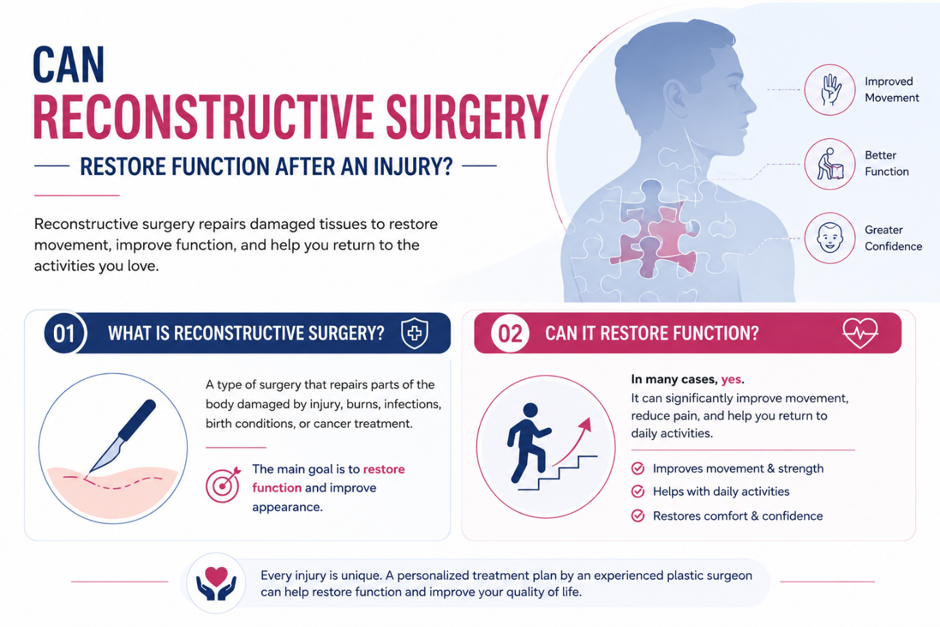
Reconstructive surgery is a type of surgery that repairs parts of the body damaged by injury, burns, infections, birth conditions, or cancer treatment. The main goal is not simply to improve how a person looks. Instead, it focuses on restoring normal function while also improving appearance whenever possible.
A skilled Plastic Surgeon carefully plans each procedure based on the patient’s injury, overall health, and recovery goals.
Unlike cosmetic surgery, which is usually performed to enhance appearance, reconstructive surgery is done to repair damaged tissues and help the affected body part work as naturally as possible.
Can It Really Restore Function?
In many cases, yes.
The success depends on factors such as the type of injury, how severe it is, how quickly treatment begins, and the person’s overall health. While surgery cannot always return everything to exactly the way it was before the injury, it can often make a significant improvement.
Reconstructive surgery may help restore:
- Movement in the hands, arms, legs, or face
- The ability to grip, lift, or hold objects
- Normal speech or eating after facial injuries
- Skin coverage after burns or deep wounds
- Better healing of damaged tissues
- Improved comfort by reducing pain caused by scar tightening
Many patients also experience increased confidence as they recover both physically and emotionally.
Common Injuries That May Need Reconstructive Surgery
A Plastic Surgeon may recommend reconstructive surgery for several types of injuries, including:
Serious Cuts and Tissue Loss
Deep wounds sometimes damage skin, muscles, tendons, or nerves. Surgery can repair these structures and help restore movement and strength.
Burn Injuries
Severe burns can leave scars that tighten the skin and limit movement. Reconstructive procedures can release these tight scars and improve flexibility.
Facial Injuries
Broken facial bones, damaged soft tissues, or injuries to the nose, lips, or eyelids may affect breathing, vision, speaking, or eating. Surgery aims to restore both function and facial balance.
Hand Injuries
Hands are involved in almost everything we do each day. Injuries affecting fingers, tendons, or nerves often require specialized reconstructive care to improve movement and coordination.
Crush Injuries
Heavy machinery accidents or road traffic accidents can cause extensive damage to multiple tissues. These injuries often require staged reconstructive procedures to achieve the best possible recovery.
What Types of Procedures Are Used?
Every injury is unique, so there is no one-size-fits-all treatment.
Depending on the situation, a Plastic Surgeon may use techniques such as:
- Skin grafts to cover areas where skin has been lost
- Tissue flaps that move healthy skin, muscle, or other tissue from one area to another
- Tendon or nerve repair to improve movement and sensation
- Scar revision surgery to reduce tightness and improve flexibility
- Bone reconstruction when facial or limb bones have been damaged
Sometimes several procedures are performed over weeks or months as healing progresses.
Regaining Function and Confidence
Recovering from a serious injury can feel overwhelming, but reconstructive surgery has helped countless people regain function, improve comfort, and return to everyday activities. While every person’s recovery is different, the right treatment plan can make a meaningful difference in both physical ability and quality of life.
If you have an injury that affects movement, comfort, or daily function, consulting an experienced Plastic Surgeon like Dr. Shraddha Deshpande can help you understand the available options. Early evaluation, appropriate treatment, and dedicated rehabilitation often work together to achieve the best possible outcome.