Can Chemical Peels Really Make My Skin Look Younger?
Introduction
Younger-looking skin is something a lot of people want, and with so many treatments out there, it’s easy to feel confused about what actually works. Chemical peels have been around for decades, and they remain one of the most popular options at dermatology clinics worldwide. But do they live up to the hype?
Let’s break it down in plain, honest terms.
What Exactly Is a Chemical Peel?
A chemical peel is a skin treatment where a solution usually containing acids like glycolic acid, lactic acid, or trichloroacetic acid (TCA) is applied to the skin. It works by gently removing the outer layers of skin, allowing fresher, newer skin to surface.
Think of it like this: your skin is constantly renewing itself, but as you age, that process slows down. Dead skin cells hang around longer, making the complexion look dull, uneven, or tired. A chemical peel speeds up that renewal process, giving skin a push it might not be giving itself anymore.
The name sounds a little dramatic, but the actual experience ranges from barely-there tingling (with lighter peels) to a more intense process (with deeper ones).
The Three Types of Chemical Peels
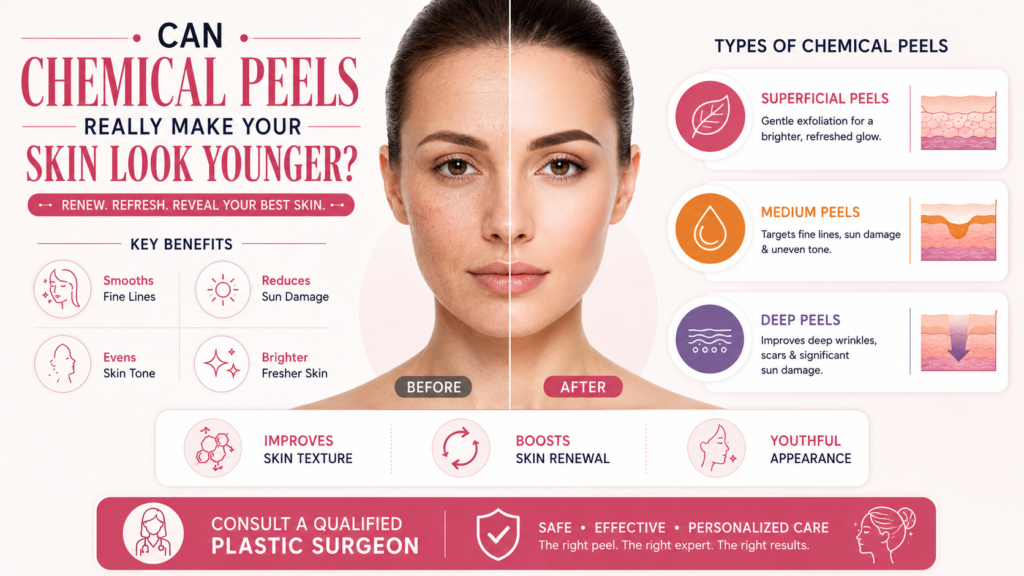
Not all peels are the same. They’re generally grouped into three levels:
Superficial peels use mild acids, most commonly glycolic or lactic acid. These work on just the very top layer of skin. They’re gentle, need no recovery time, and are great for brightening dull skin, evening out skin tone, and giving an overall fresher look. Many people get these monthly as a maintenance treatment.
Medium peels go a little deeper. TCA is commonly used here. These target fine lines, sun damage, and mild scarring. You might experience some redness and peeling for a few days afterward, similar to a mild sunburn, but the results are more noticeable.
Deep peels reach the deeper layers of skin and can produce dramatic improvements in wrinkles, deep scars, and significant sun damage. These require proper recovery time, sometimes a week or two, and are usually done only once. They’re always performed by a trained medical professional and aren’t suitable for everyone.
What Can Chemical Peels Actually Improve?
Here’s where it helps to be realistic. Chemical peels can genuinely help with:
- Fine lines and mild wrinkles, especially around the mouth and eyes
- Sun damage and age spots, those brown patches that appear with years of sun exposure
- Uneven skin tone and dullness
- Mild acne scars and some active acne
- Rough skin texture
- Enlarged-looking pores
What they won’t fix: deep wrinkles, sagging skin, or very prominent scars. For those concerns, other treatments like fillers or laser therapy may be more appropriate.
Are Chemical Peels Safe for Everyone?
For most people, yes – when done correctly. But there are a few things to keep in mind.
Skin tone matters. People with darker skin tones need to be more careful with medium and deep peels, as there’s a higher risk of temporary skin darkening (post-inflammatory hyperpigmentation). Superficial peels are generally safer for a wider range of skin tones, but it’s important to see a qualified professional who has experience with your skin type.
Sun exposure. After any peel, your skin is more sensitive to the sun. Sunscreen isn’t optional; it’s essential. Skipping it can undo your results and cause new pigmentation issues.
Active skin conditions. If you have active cold sores, eczema flare-ups, or rosacea, peels may not be recommended until your skin settles.
Always consult plastic Surgeon before getting a peel. A good professional will assess your skin, recommend the right type, and tell you honestly if you’re not a suitable candidate.
What to Expect — and How Many Sessions?
Before your peel, a doctor may ask you to prep your skin with specific products for a few weeks to improve results. During the treatment, you’ll feel tingling or warmth. Superficial peels are comfortable, while deeper ones may need numbing cream. After, depending on depth, expect a subtle glow (superficial) or visible peeling and redness for a few days (medium to deep). Moisturising and sun protection are essential during recovery.
As for sessions, superficial peels work best in a series of four to six spaced a few weeks apart, with monthly maintenance after. Medium peels may need two to three sessions. Deep peels are typically a one-time treatment, with results lasting months when paired with a good skincare routine.
The Honest Answer
So, can chemical peels make your skin look younger? Yes genuinely, and often noticeably. They’re one of the most evidence-backed cosmetic treatments available, and when done by the right professional with the right peel for your skin type, the results can be impressive.
They’re not magic. They won’t erase twenty years overnight. But for improving skin texture, evening out tone, softening fine lines, and restoring a fresher look they work.
If you’re considering a peel, start with a consultation. The right guidance makes all the difference between a treatment that transforms your skin and one that disappoints or worse, causes harm. plastic surgeon like Dr. Shraddha Deshpande, who specialise in cosmetic and skin treatments, can assess your skin type, recommend the most suitable peel, and walk you through the process so you feel confident every step of the way.